
Creativity, Collaboration & the Radical Act of Making Together
~ a guide on human creativity, collective practice, and the politics of individualism + how to apply it in your own creative practice

This is the third entry in the series documenting the development of SecondComing, a 3D virtual space built inside Unreal Engine for independent designers. Last entry covered the pre-production research and development of concept boards such as mind maps and mood boards. Read part 1 & part 2.
Introduction
Within every creative project I have worked on, collaboration has been central to my practice. Creativity is a name we gave to something innately human. A practice that lives within all of us. Every person is not only capable of it, but has it ingrained within their nature. Creativity is not something we have; it is something we are.
The philosopher Hannah Arendt spent much of her life thinking about what it means to be fully human. One of her central conclusions was that we cannot be ourselves alone. She called this plurality: the simple, profound fact that no two people are alike, and that this difference is the very condition that makes meaningful action possible. For Arendt, the most important things we do — creating, debating, building, imagining — only come alive in the presence of other people. A painting never seen, a song never shared or an idea never spoken out loud remain incomplete. It is the encounter with another that activates them.
She also introduced the concept of natality: the idea that every new person born into the world brings with them the capacity for something genuinely new to begin. You can apply this in your work by thinking of every collaborator you bring into a project carrying within them a perspective, a way of seeing, that you could not have generated alone. Creativity, in this sense, is not a talent some people have and others don’t. It is a condition of being human, that comes with being alive. Arendt also argued that if we truly want to be free, we have to give up the need to be in total control. The moment you open your work to another person, you accept that it will become something you could not have predicted.
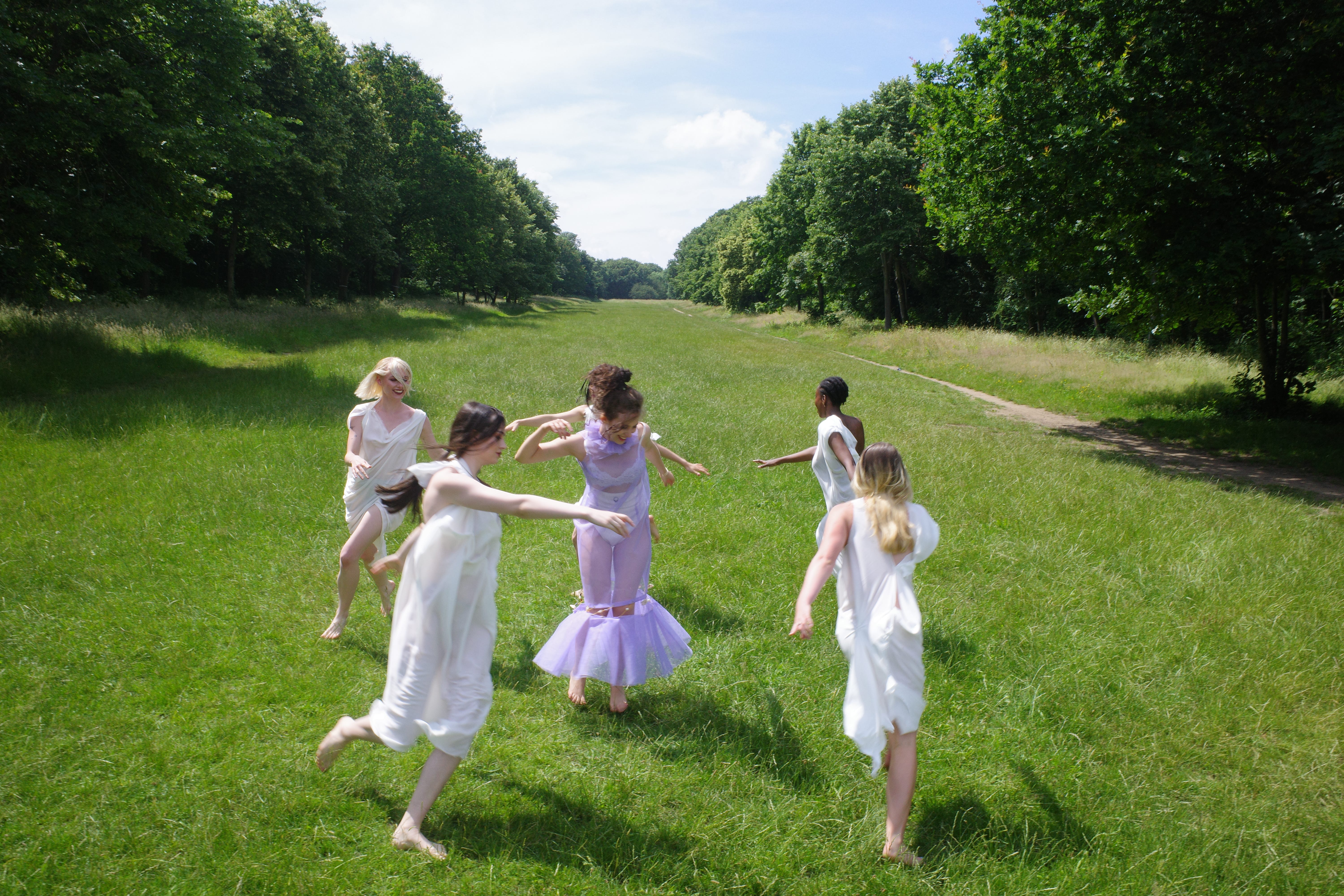
The second nature of the human is the need for collaboration. Researchers have long studied how human societies have formed and developed through the instinct to cooperate. Within an individualistic society governed for the past hundred years by personal achievement and optimisation, multidisciplinary collaboration in the name of creating has always been a radical act.
There is also a larger truth here about how human knowledge has always worked. Researchers at the University of St Andrews and Durham University have shown that everything we know as a species, from new technologies to art forms to cultural practice, is built layer by layer, each generation inheriting and extending what came before. What feels like individual creative output is always, at some level, a relay of passing forward what was handed to you. Creativity is never really yours alone; it belongs to a lineage.
I felt this to be true after my first project, in which I collaborated with over 20 creatives on a fashion film for my debut collection, ranging from graphic designers, models, hairstylists, Director of Photography and editors. Seeing the final result and knowing that all of those people had chosen to believe in me and my idea was the most fulfilling and humbling experience of gratitude I have known.
Beyond the finished piece, the process also opened the door to meaningful connections. Many of those collaborators stayed in touch, and several went on to work together on new projects as a result.
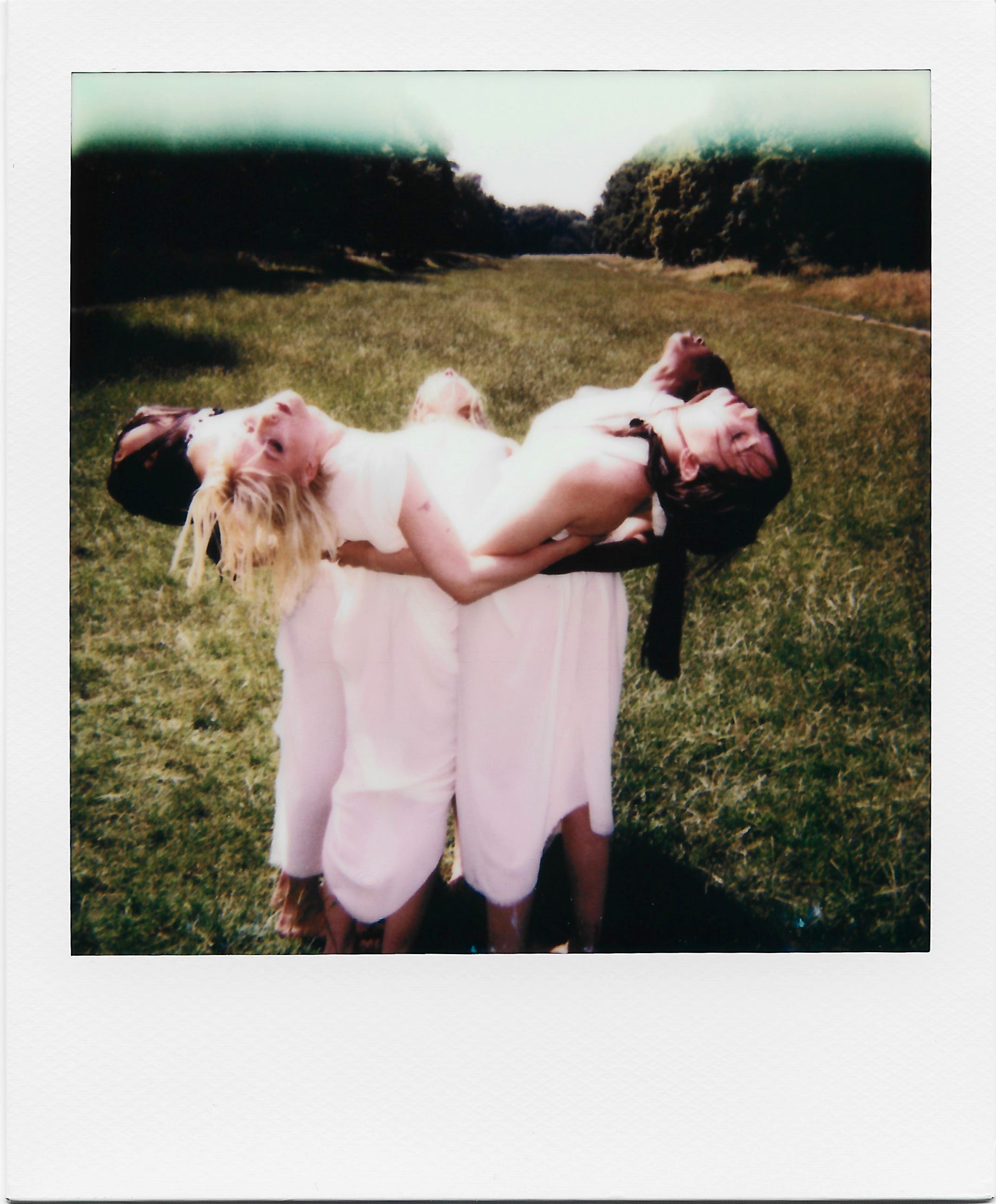
I also want to acknowledge that when you’re just starting out, collaboration can feel intimidating. It requires a level of vulnerability—putting your ideas out into the world, sharing them with people you admire, and persuading them that your project is worth both their time and involvement. There will be moments when you’re ignored or turned down, and that’s completely okay. What matters is persistence; if you keep going, I can assure you it will be worth it in the end.
For this reason, I have put together a guide on how to get started, drawing from my collaborations with two jewellery designers for my 3D world in Unreal Engine, in the hope of inspiring other creatives at the start of their careers who want to collaborate but are not sure where to begin.
1. Build Your Collaborator Database
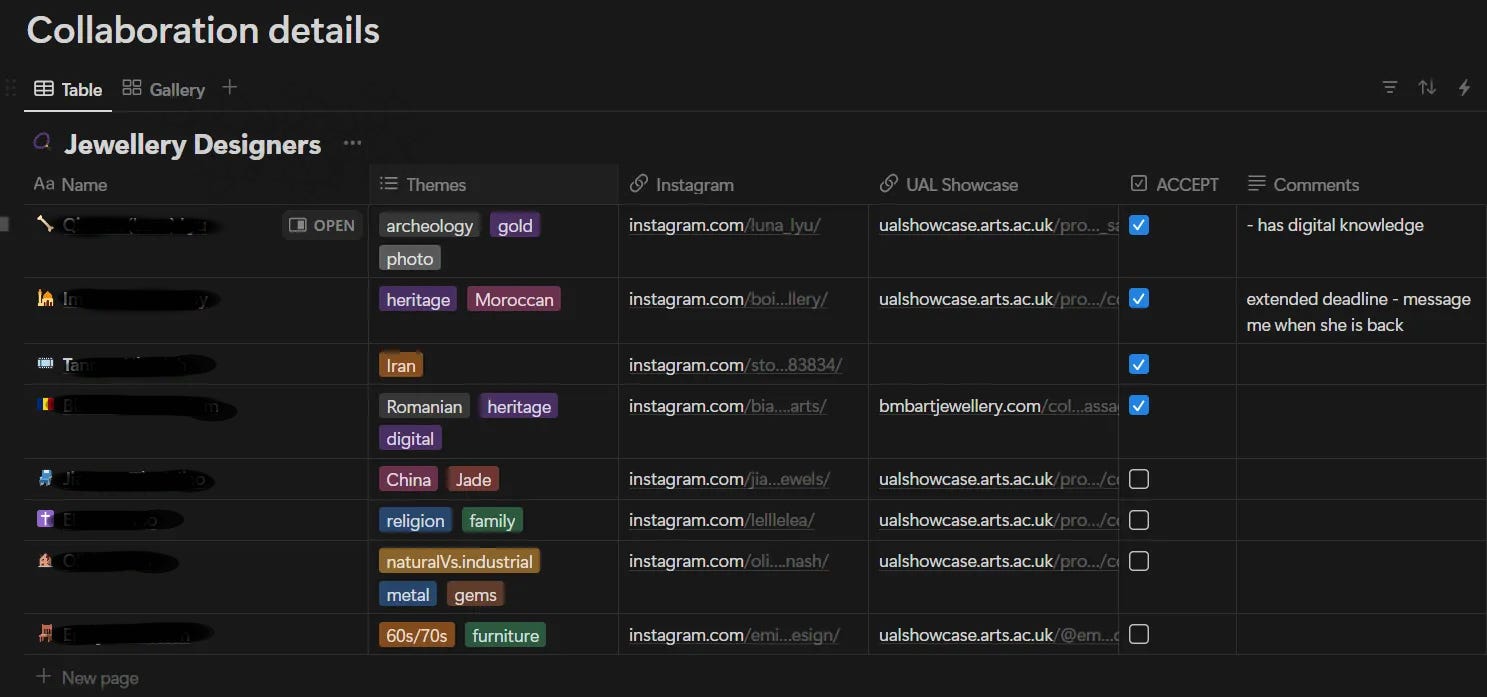
The first step is putting together a database of potential collaborators. I use Notion for this, and it has become one of the most useful organisational habits in my practice. Create a simple table with their name, the themes in their work that interest you, their contact details, and a notes column for your observations. I also added a checkbox for those who agreed to a meeting. This way it keeps the process visible and stops promising leads from getting lost.
Where to Find Collaborators
For this project I used the UAL Graduate Showcase. If you are just starting out and do not yet have a budget to work with people who have established careers, university showcases are the best place to begin. You can see the work in context, understand their practice, and reach out directly. Treat it like a catalogue: browse with intention, save what resonates, and come back to it.
The criteria I used when selecting collaborators were a strong visual and conceptual portfolio, a connection to cultural heritage or nature, and an openness to working in ways they had not tried before. This phase was about researching, reaching out, building early relationships, and developing the initial structure of the project.
2. Write a Treatment
Once you have identified potential collaborators, the next step is reaching out. The most effective thing you can bring to that conversation is a treatment.
A treatment is a short document that communicates the essence of your project before it exists. It is used as a visual and conceptual pitch to gives the person reading it a clear sense of what you are making, why you are making it, what it will feel and look like, and where their work fits within it. Its purpose is to do two things: communicate your vision clearly enough that someone can decide whether they want to be part of it, and demonstrate that you have thought seriously enough about the project to be worth their time.
A good treatment includes:
A short project description
The concept or idea behind it
Mood and aesthetic references — images, films, colour palettes
The format and intended outcome
The roles you are looking to fill
A rough timeline
The treatment matters because when you are approaching an artist, whose work you admire, it shows that you respect their time, that you have a real vision, and that you are serious enough to have already done the work of articulating it.
You can view the treatment I used here.
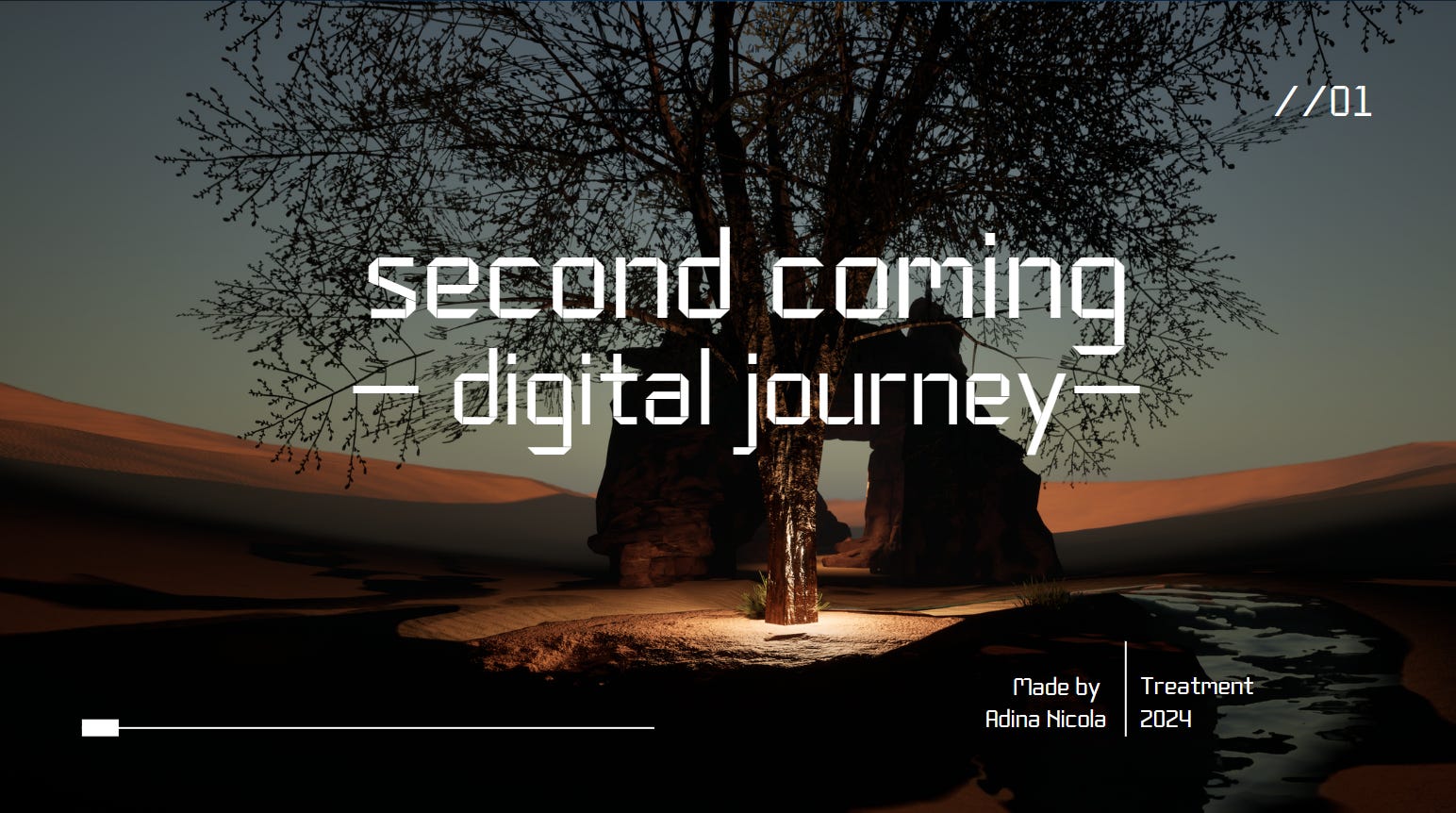
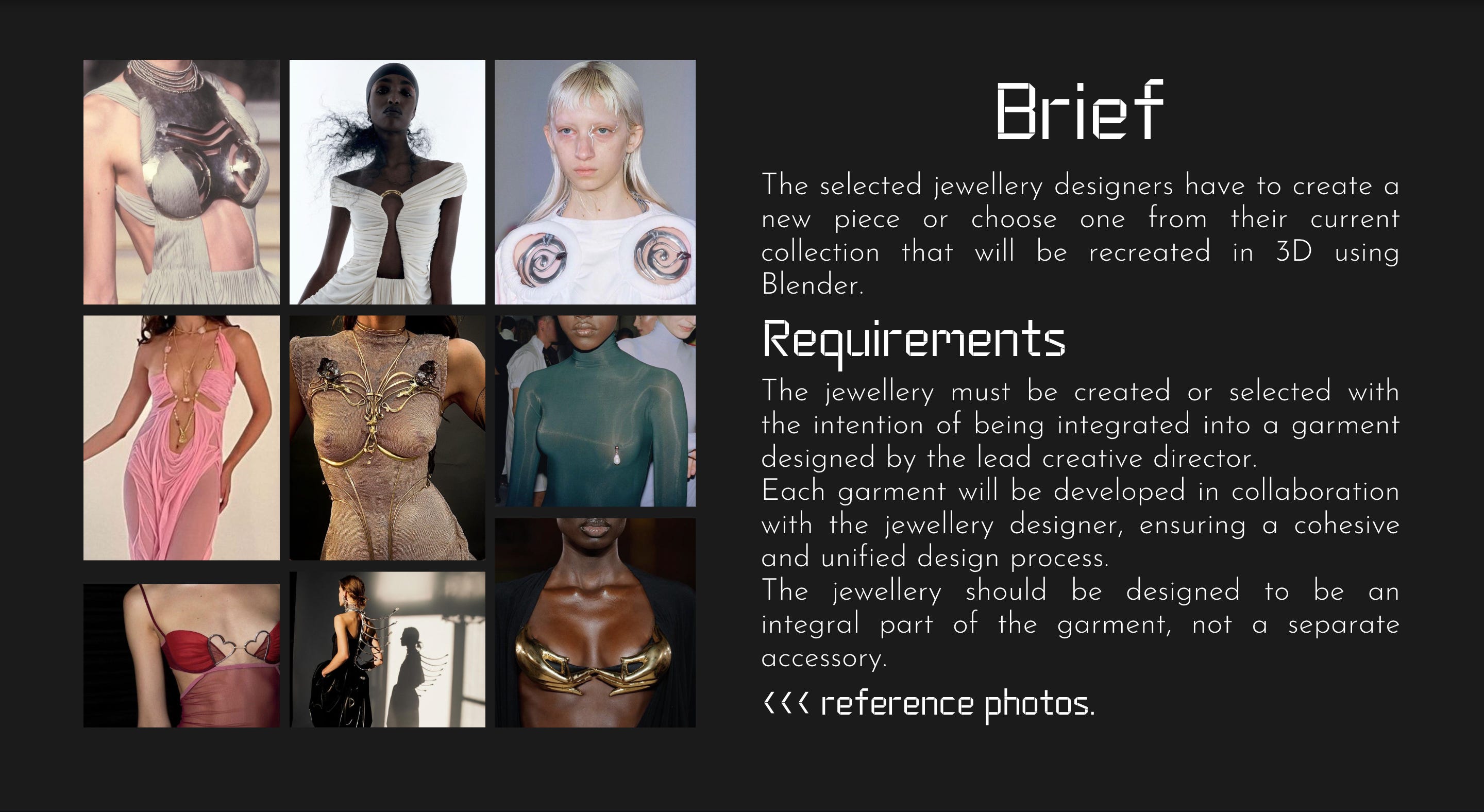
3. Consultation sessions
Once the team was in place, I held a series of consultation sessions to align everyone’s vision and turn the treatment into concrete plans. You can structure these sessions by:
Sharing the project vision in detail, using visual boards for level inspirations, colour schemes and narrative direction
Inviting each designer to bring their own initial sketches and ideas to the table
Using those sketches and ideas as the starting point for building the virtual environments, rather than imposing a finished plan
Discussing how each piece of jewellery will live inside the 3D world and what role it plays in the overall experience
Agreeing together on a shared timeline with clear milestones, so everyone understands what happens when and what is expected at each stage
This creates a sense of ownership, because the final digital representations of the work are shaped from the inside by the designers themselves.
4. How to Turn Consultation into a Project
Now you can start to translate consultation sessions into an actual piece of work by:
Defining clear goals for the piece (what you want someone to feel, think or do after seeing or interacting with the project)
Translating your collaborator’s core concept into a spatial, visual or narrative structure
Deciding what the audience will do inside that structure (explore, collect, listen, watch, interact)
Mapping a simple beginning, middle and end to their journey through the work
Identifying where and how the collaborator’s work appears, and what each encounter reveals
Using early sketches, references and tests in conversation with your collaborator to refine the environment
Making design choices (colour, scale, materials, sound) that respond directly to their ideas, not just your own
This approach works whether you are building a 3D level, staging an exhibition, designing a film sequence or creating an interactive installation.
Bellow is how I applied this advice in my own practice:
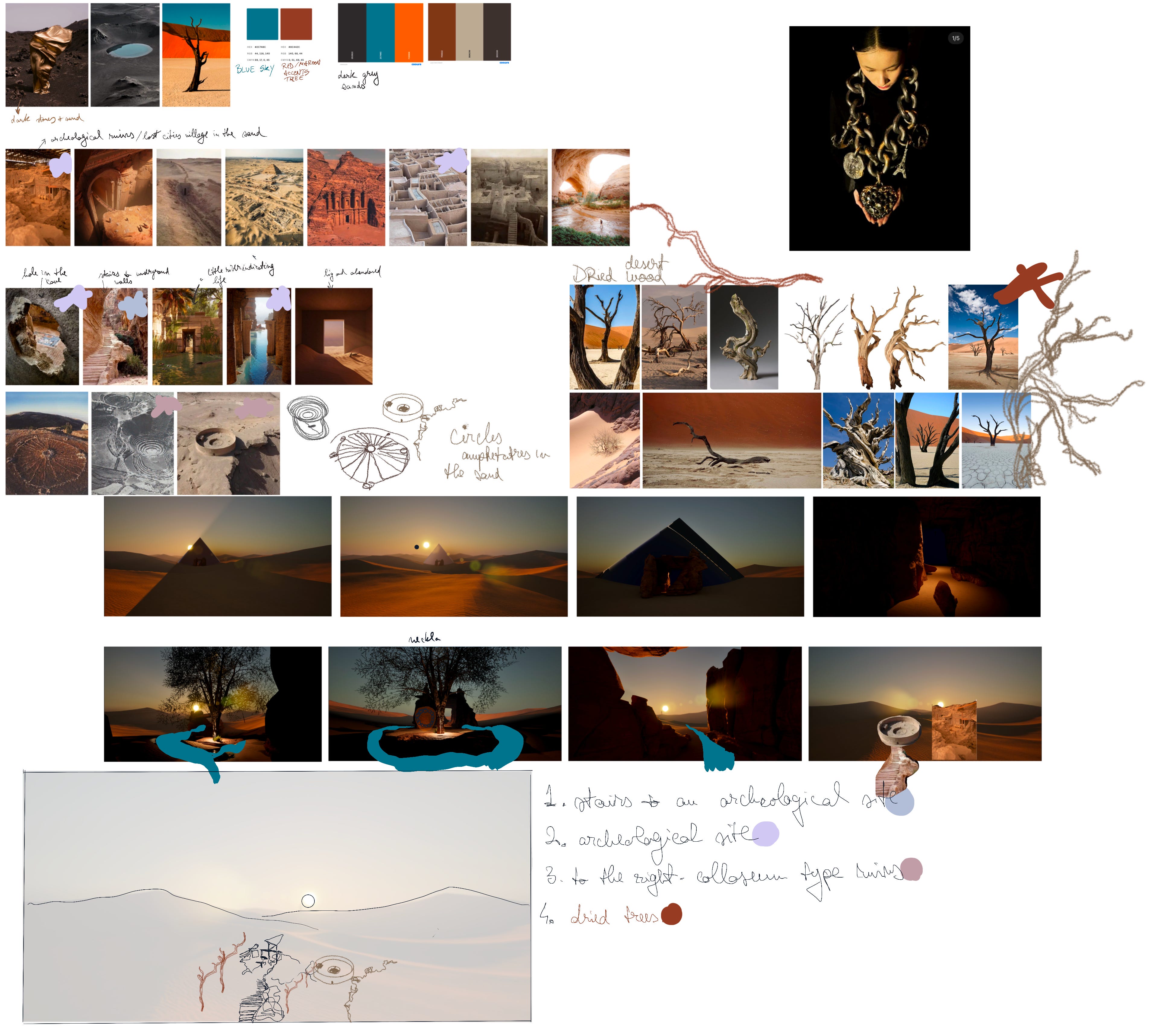
The second level of the immersive experience is inspired by the work of Qiuwen Luna Lyu, a Chinese artist who uses jewellery as a medium for exploring contemporary societal issues. Her conceptual collection “4024” imagines a future where bioengineering technology shrinks humans to 15 cm in height by the year 4024, drastically reducing food and energy consumption. Set in this speculative future, her collection reinterprets jewellery from 2024 as archaeological artefacts. Building on this idea, the second level is designed as a futuristic archaeological site in the desert, with mirrored pyramids and columns. The space creates a stark contrast to the confined cave of the first level and suggests a sense of emergence into a larger world. As players explore the site, they collect charms for a bracelet, each one revealing more of the collection’s meaning while attaching to their garment and gradually evolving its design.
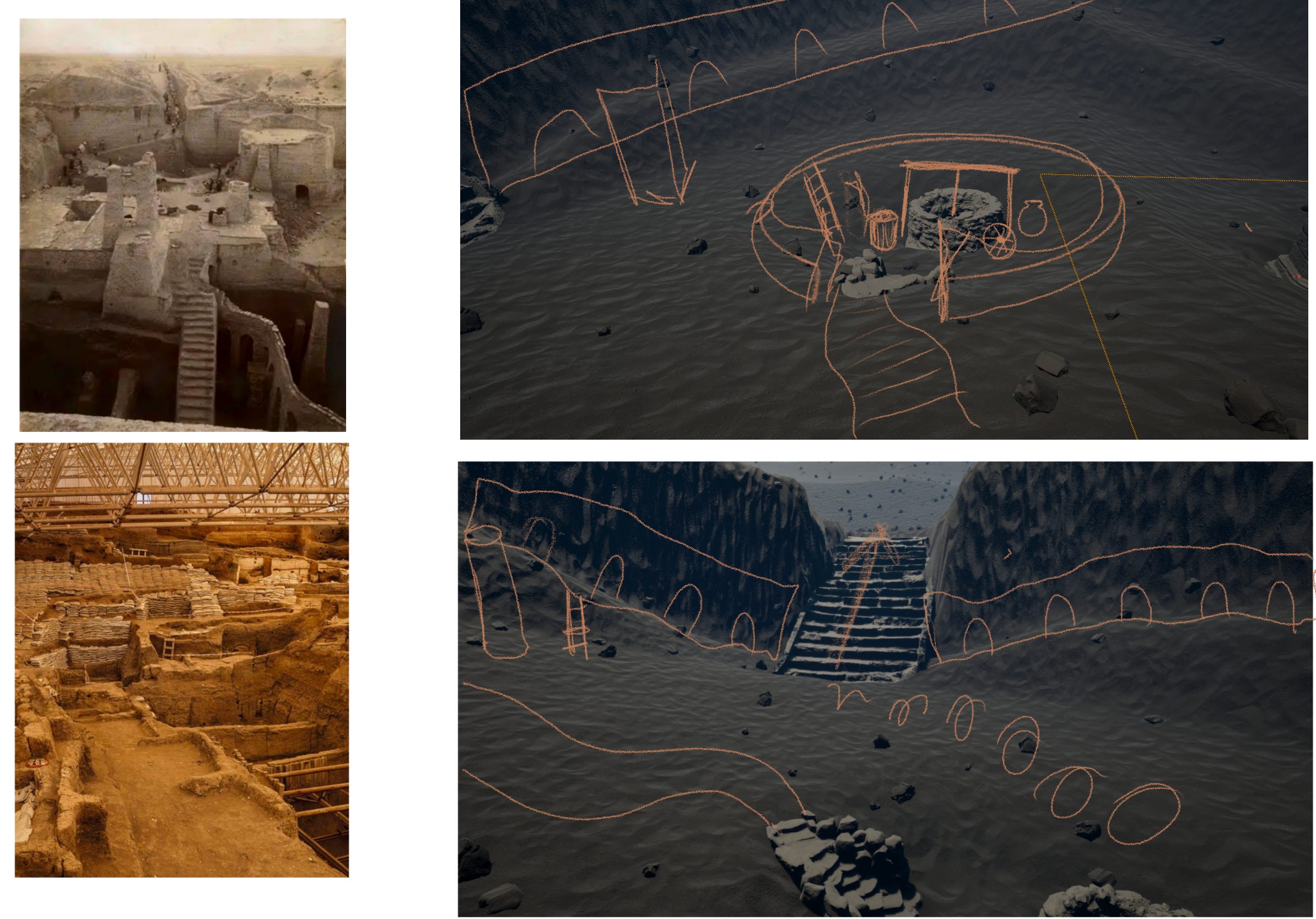
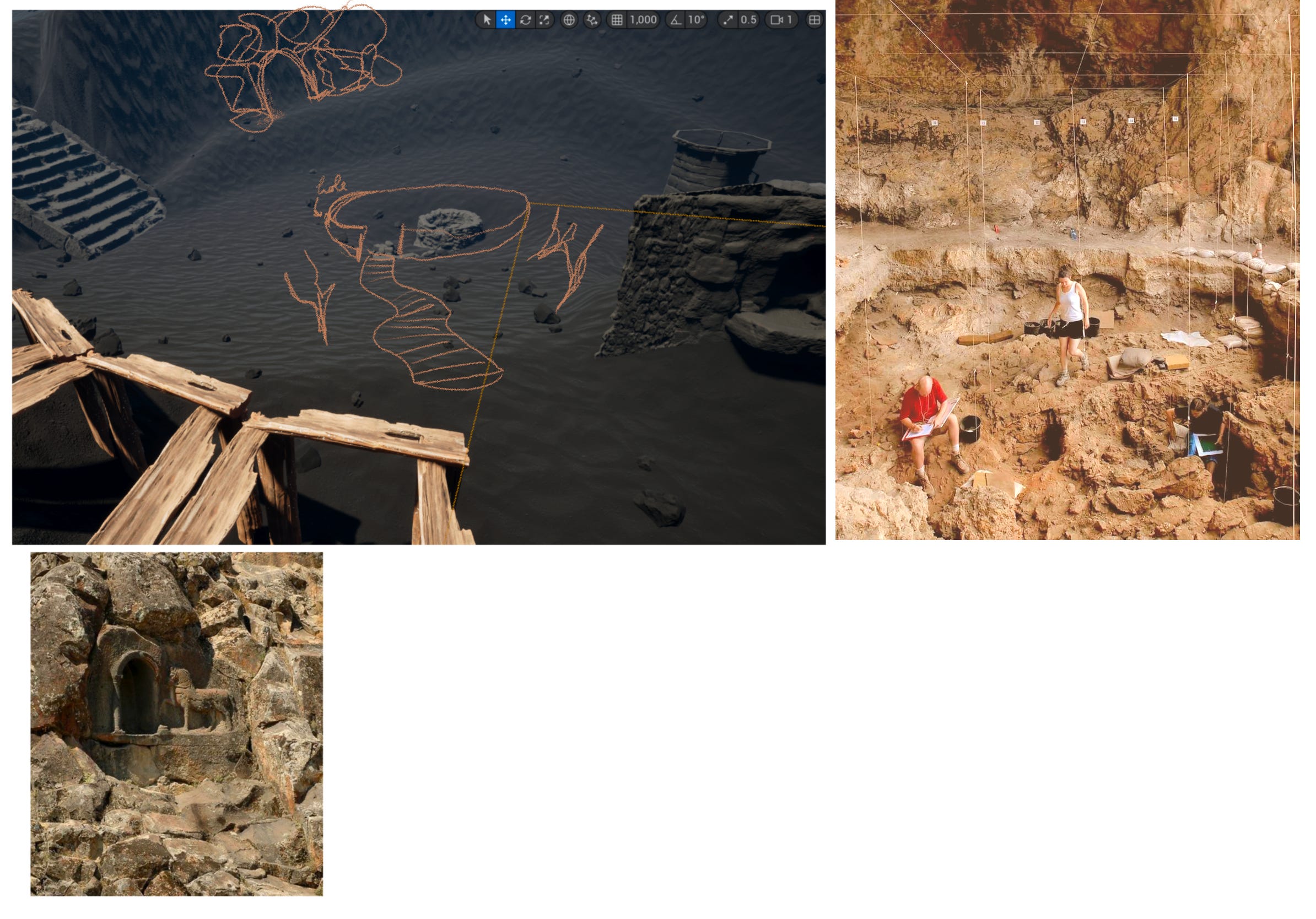
Luna’s input shaped every aspect of this level, from the environment to the colour palette. The dark grey tones of the sand contrast with the maroon red garment, which is designed to feel futuristic and reflect what someone in 4024 might wear. The bracelet, initially conceived as a wrist piece, is repositioned around the neck and back, connecting to the concept of human downsizing. Guided by a beam of light, players navigate the desert and uncover Luna’s designs, engaging with her vision in a way that blends speculative storytelling with interactive discovery.
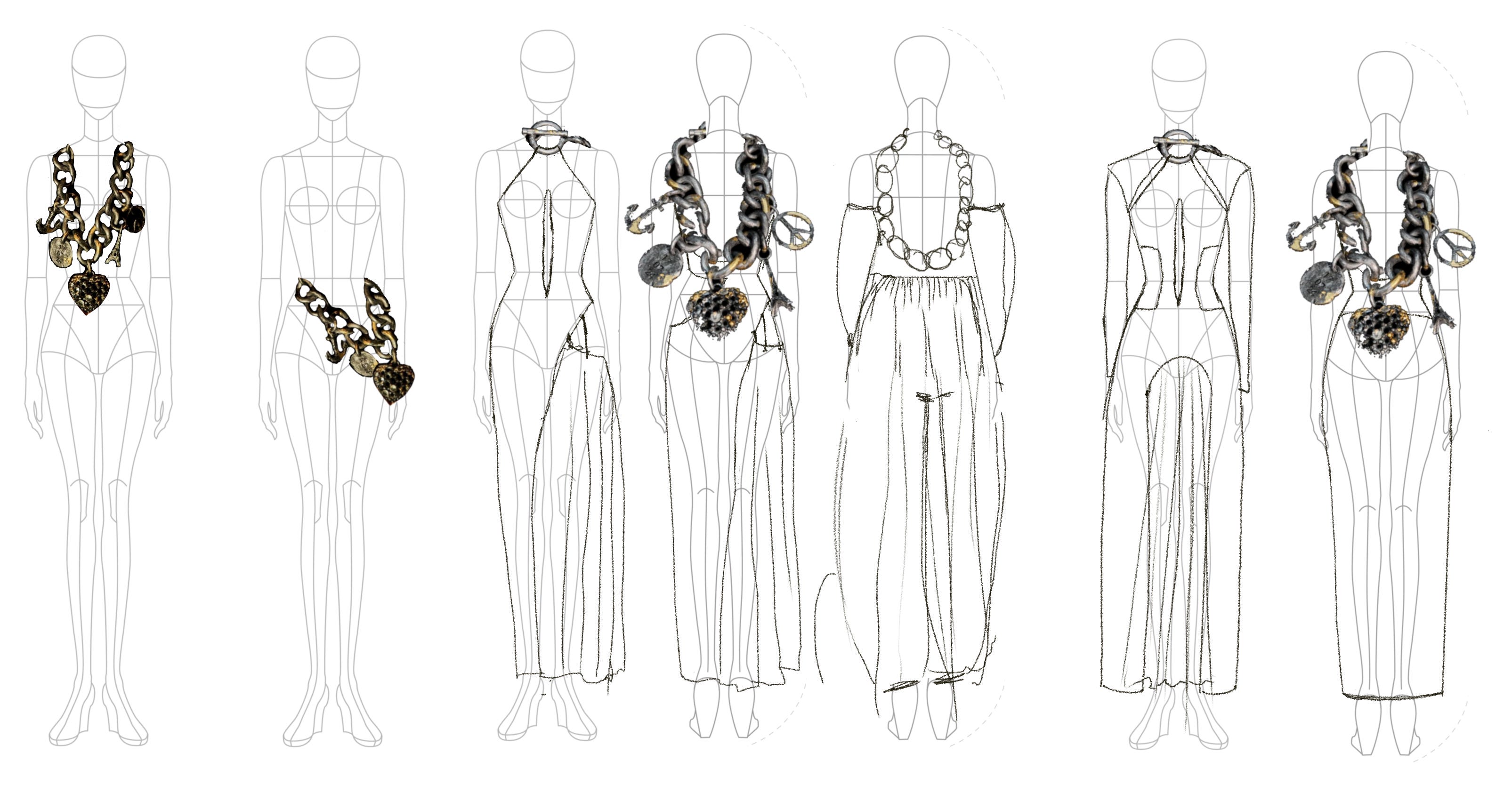
Designing the garment was a collaborative effort that blended Luna’s vision of a futuristic downsized society with my own design ideas and aesthetic preferences. The image below shows my experimentation with jewellery placement, exploring different options to determine the most impactful position. I ultimately chose to place the jewellery on the back and neck, then built the rest of the dress around these focal points. Instead of treating the jewellery as a separate element, I integrated it into the fabric using eyelets, metal rings and clasps, creating a seamless connection between the garment and the jewellery.
You can find Luna Lyu on Instagram and her website.
Next week we are diving deep into the history of jewellery embedded garments along with my second collaborator Bianca Maria Bolum. See you there!